
Why the “Lowest Bid” Often Costs More
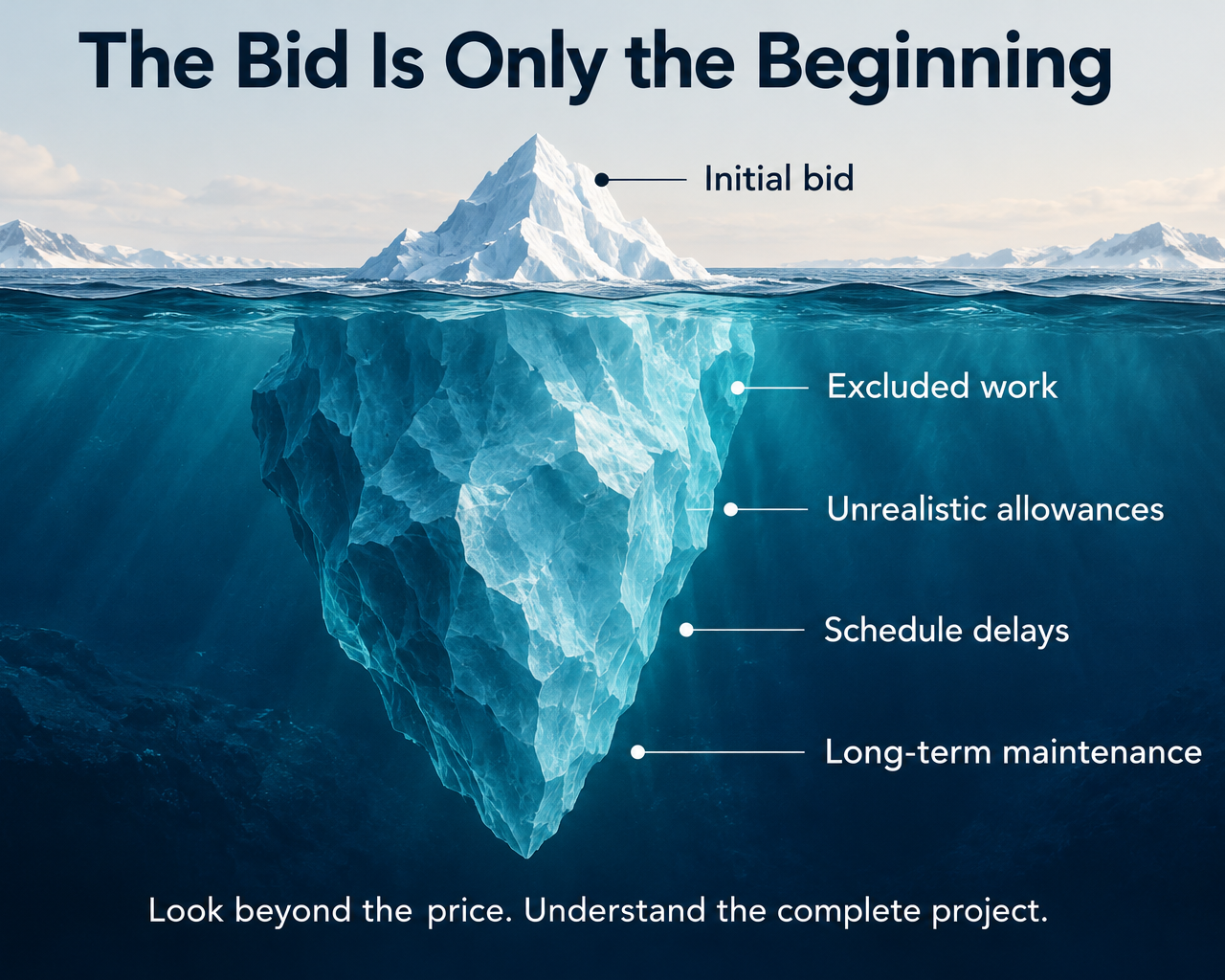
When planning a construction project, the budget is one of the first things owners consider. Whether you are expanding a business, renovating an existing facility, or building something new, choosing the lowest bid can feel like the most responsible financial decision. But the price on a proposal only tells part of the story. A low bid can offer genuine value when the scope is complete and the contractor is qualified. Problems arise when apparent savings come from missing work, unrealistic assumptions, or decisions that increase costs later.
Are You Comparing the Same Project?
Two contractors can price the same drawings and still submit proposals with different assumptions, exclusions, and allowances. An allowance is a budget placeholder for something that has not been fully selected or defined. One proposal might include site preparation, utility connections, and specific finishes, while another excludes certain items or carries smaller allowances. Until those differences are clarified, the totals may not represent comparable work.
For example, a hypothetical $50,000 difference becomes much less attractive if the lower proposal excludes $40,000 in necessary work. The American Institute of Architects recommends resolving negotiations about price and scope before signing the construction contract.
The Cost of Unanswered Questions
Unclear scope can lead to additional costs, disagreements, and delays once construction begins. Change orders may be necessary for legitimate reasons, including owner-requested changes or unforeseen conditions. However, clarifying what is included upfront helps reduce avoidable surprises.
Schedule assumptions deserve the same attention. Ask how the contractor plans to staff the project, coordinate subcontractors, and account for material delivery times. For a business waiting to open or resume operations, a delay can also mean additional rent, disrupted services, or postponed revenue.
Savings Should Last Beyond Opening Day
A building continues to generate expenses long after construction is complete. Maintenance, energy use, repairs, and replacement all affect what an owner ultimately pays.
The National Institute of Building Sciences’ Whole Building Design Guide recommends evaluating life-cycle costs when comparing systems with different purchase and operating costs. A less expensive system upfront may cost more over its useful life, depending on its efficiency, maintenance needs, and longevity.
Look for Value You Can Understand
Before selecting a contractor it is crucial to ask the following four questions:
What is included, excluded, or covered by an allowance?
Does the proposed schedule reflect actual delivery times?
What experience does the team have with similar projects?
How will questions, changes, and quality concerns be handled?
The AIA distinguishes best-value selection from low-bid selection by considering qualifications alongside cost.
Our approach starts with listening, thoughtful planning, and clear communication. By reviewing scope, evaluating options, and discussing potential challenges early, we help clients understand their investment before work begins.
A well-informed decision considers the complete project: what it will take to build, how it will function, and how it will serve your organization for years to come.

Written by Dakota Ortega
Dakota serves as our Marketing Coordinator. She attended The University of Tennessee Southern where she graduated early, earning her BS in Business Administration - Management in December of 2022. She earned her MBA from The University of Tennessee Southern in May of 2024. Dakota is dedicated to leading and directing Brindley Construction’s marketing needs with creativity at its forefront. She is an active member of Rotary Club of Pulaski and Giles County Chamber Diplomats.